
While growth in Emerging Economies will require a vast amount of resources, one resource that is changing the landscape in Northern BC more than any other is natural gas. Currently, Asia (China, Japan, South Korea) has a critical shortage of natural gas, and this shortage has been exacerbated by the Tsunami that hit Japan last year, causing a shift from nuclear power to natural gas.
In preparation for Japan, South Korea, and China to receive LNG tankers from foreign sources, $44 Billion is being spent on LNG terminals, with 40 new facilities currently planned or under construction.
The incentive for Canada to ship LNG is simple… money. Natural gas is in oversupply in North America and is typically trading between $2 and $3 per British Thermal Unit (BTU). In contrast, that same BTU in Asia sells for $10 to $16, many times the going rate in North America.
Natural Gas Price Difference Between North America and Asia
Currently, the majority of natural gas imports come from Qatar, Malaysia, and Australia, with no imports currently coming from Canada. Asia`s main importer of natural gas is Qatar, which has a much longer shipping distance to Asia than Canada. This distance advantage for Canada means there is a great window of opportunity to begin shipping gas across the Pacific.
Natural gas is shipped in a liquefied form, called Liquefied Natural Gas (LNG). In order to ship the LNG to Asia it first has to be transported via pipelines from Northeastern BC to the Coast. The gas will then be liquefied at LNG terminals in a process where the gas is cooled to -160°C, increasing density by 600 times, thus making it much easier and safer to ship.
LNG Tanker
Canada has the opportunity to become a major player in shipping LNG to Asia because of its massive natural gas reserves in Northeastern BC. It has been estimated that the two main natural gas basins in Northeastern BC, the Motney and Horn River basins, contain as much as 31% of all gas reserves in North America. The reserves are so vast that Vic Levinson, the executive director with the BC Ministry of Energy, says that “We’ll probably be producing out of the Horn River and Motney Basins 40 years from now, because it’s such a huge area and these shale’s produce for years and years.”
BC is already aggressively developing the infrastructure necessary to send the first LNG shipments to Asia. BC’s Minister of Energy and Mines, Rich Coleman, outlines BC’s plans for LNG infrastructure in the BC Jobs Plan; “The Province has committed to having our first LNG plant up and running by 2015, with a total of three LNG facilities operating by 2020.”
The first of BC’s three Kitimat LNG terminals that are furthest along is the BC Haisla First Nations LNG Co-op, which is a joint venture between the Haisla First Nations and LNG Partners of Houston. The project will be a $360 to $450 Million Development and the goal is to send its first shipment of LNG to Asia in 2014.
The second Kitimat LNG terminal is a joint venture be- tween Encana, Apache Resources, and EOG Resources. The project will be a $4.5 to $10 Billion Development, and is slated to begin shipments to Asia by 2017.
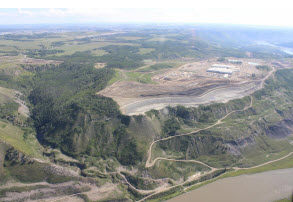
Heavy Equipment begins work at the Apache, Encana, EOG Resources LNG Terminal in Kitimat, BC
The third and largest terminal is a joint venture between Royal Dutch Shell, Mitsubishi, Kogas, and PetroChina. The project is expected to bring the largest private investment that BC has ever seen, at approximately $12 Billion. This LNG terminal is scheduled to begin shipments in 2019. It should also be noted that foreign investment in BC’s natural gas, mostly from Asia, now totals over $8 Billion, which is a strong indicator of their level of interest in developing our resources.
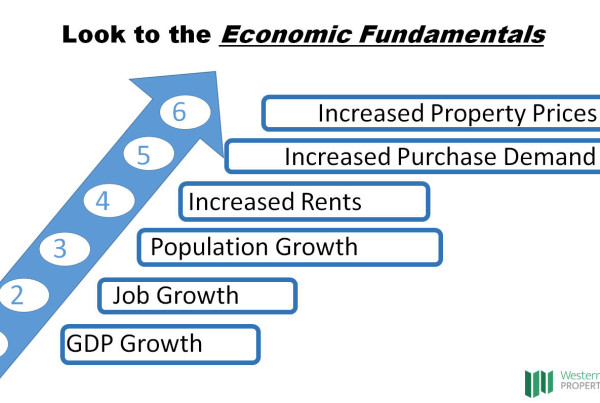
The LNG facilities on BC’s coast will have a great impact on Kitimat and other communities “up- stream”, such as Dawson Creek and Fort St. John. Construction of LNG infrastructure will provide over 9,000 jobs, with thousands of potential spin-off jobs. While the impact of multi-billion dollar investments and thousands of jobs would be felt in any town, it is nearly overwhelming for communities the size of Kitimat, Dawson Creek, and Fort St. John, whose combined populations total approximately 40,000. We expect that as jobs are created in the area, renters will come and both rents and property values should increase significantly.